SOLARISE

: University of Picardie Jules Verne Amiens - UPJV (FR)
Knowledge institutions: KU Leuven (BE), TC Ghent (BE), University of Portsmouth (UK), and UPJV (FR).
Cities and municipalities: Brighton & Hove (UK), Fourmies (FR), Heerhugowaard (now: Dijk en Waard) (NL), Middelburg (NL), Middelkerke (BE), and Zoersel (BE.)
Supporting project partners: Camp C (BE), Enercoop (FR, and Flux50 (BE).
: € 4.18 m
: Subsidy Interreg: € 2.51 m (60%)

The goal of the SOLARISE Interreg 2 Marine project is to encourage the use of solar energy, with a special focus on locations where solar power is less obvious. The project focuses on historic and public buildings, as well as social housing sites. SOLARISE also aims to introduce new technologies to a wider audience and reduce the impact of solar energy on the electricity grid by combining it with storage capacity.
The SOLARISE project has produced multiple findings in various fields of sustainable energy. In the technical field, there are the results regarding the interaction between PV production and battery storage and how the seasons impact this relationship. SOLARISE has also discovered technical challenges to the installation and deployment of hybrid panels (PVT), which generate electricity and heat, as well as the weak regulation on home batteries. It is crucial to assesswhether the combination of techniques is feasible and appropriate at an early stage.
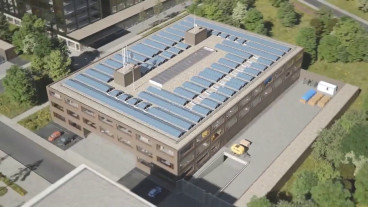
With regard to public projects such as PV on school buildings or gyms, it has become clear that engaging citizens from the first moment of planning and providing the opportunity to invest increases the level support for renewable energy projects.. This makes it easier to implement additional sustainable projects. This also applies to the social housing projects within SOLARISE, where an innovative approach to energy parts has enabled economically weaker groups to enjoy the benefits of a sustainable living experience.

Implementing sustainable measures for monuments or historic city centres has been a common challenge. Regulations aimed at preserving historical character often limit the possibilities of making them more sustainable. The project has exhibited that there are already several techniques that can sustain historic buildings without affecting their appearance, such as roofs that heat an underlying pipe system and produce sustainable heat. 
Results
In addition to all these practical findings that will provide future projects with guidelines for a good project approach, the SOLARISE pilot projects have also contributed to sustainable energy production. In total, solar panels with more than 460 kWp have been installed, representing an annual CO2 saving of approximately 80 tons!